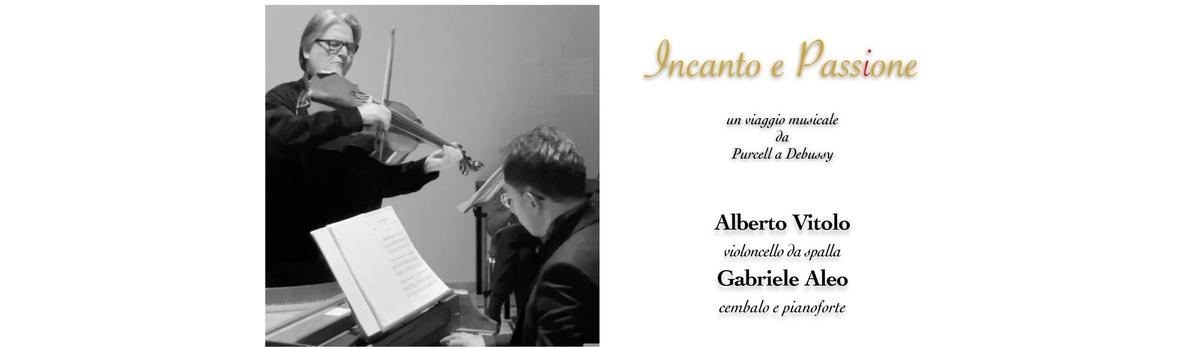
Enchantment and Passion: a musical journey from Purcell to Debussy
Rome, Sala Baldini — Main Hall
About the Event
Discover an evening of sublime musical delight with 'Enchantment and Passion: a musical journey from Purcell to Debussy' at the renowned Sala Baldini.
Violoncello da Spalla
Between the 17th century and the first half of the 18th century, the violoncello da spalla was a popular instrument among violinists, if only for the range of opportunities it offered them.
They used it to play bass lines, accompaniments, and even obbligato solo parts. Composers wrote sonatas and concertos for this instrument or that could be played on it, and it was widely used as an obbligato instrument in church and chamber cantatas.
Cellists/violinists from northern Italy traveled throughout Europe. Caldara, Bononcini, and Dall'Abaco left their mark in Catalonia. Violinist, cellist, and researcher Diana Roche of Barcelona is conducting research on a vast production of church cantatas by Catalan composers who regularly used the small five‐string cello in solo and obbligato parts between the late 17th and mid‐18th centuries.
We still have some instruments in museums that are very similar to the violoncello da spalla we use today. Those built by Johann Christian Hoffman, friend and luthier of Johann Sebastian Bach, are only the most famous and relevant. We know of five such instruments: unfortunately, two were lost during the war. Of those still in existence, one is in Leipzig, one in Brussels, and one in Berkeley. One of these five appears in the inventory upon the death of Carl Philip Emanuel Bach, and another was owned by the Thomaskantor until World War II.
Artists
| Violoncello da Spalla: | Alberto Vitolo |
|---|---|
| Piano: | Gabriele Aleo |
Address
Sala Baldini, Piazza Campitelli 9, Rome, Italy — Google Maps