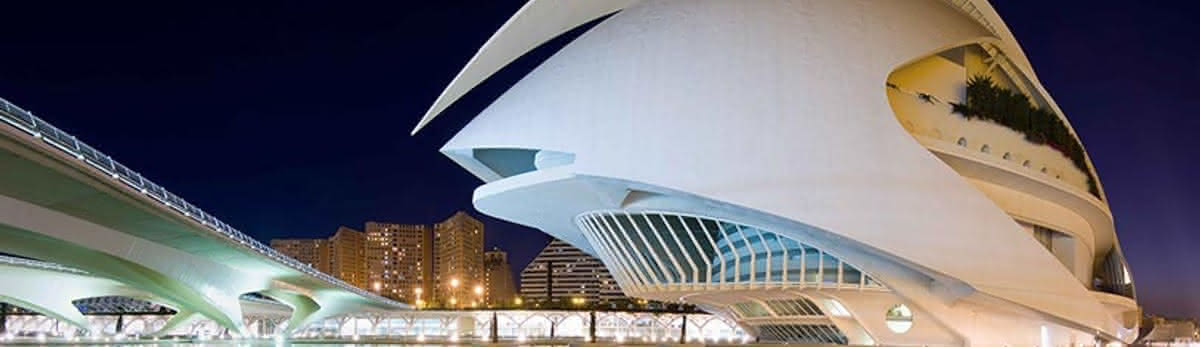
 Palau de les Arts Reina Sofia, Valencia, © Palau de les Arts Reina Sofia
 Opera at Palau de les Arts Valencia
Opera at Palau de les Arts Valencia is unlike anything else on the European cultural map. While most of the continent's great opera houses draw their prestige from centuries of tradition, the Palau de les Arts Reina Sofía draws its from sheer architectural ambition and a remarkably rapid rise to international standing. Opened in 2005 as the crowning piece of Valencia's City of Arts and Sciences, it is both the youngest major opera house in Spain and one of its most visually extraordinary — a building that looks as much like a sculpture as a theatre.
For visitors planning an evening in Valencia, the Palau offers something genuinely singular: world-class opera and orchestral music inside a building by Santiago Calatrava that has become one of the city's most recognisable landmarks. On Classictic, you can browse upcoming performances at Palau de les Arts Valencia and book your seats in advance.
There are currently no event dates available.
A 21st‐Century Opera House
Most European opera houses carry the weight of the 18th or 19th century. The Palau carries no such burden. Conceived as part of Calatrava's vast cultural complex along the old Turia riverbed, the building was designed from the outset as a statement about Valencia's future rather than its past. Construction took nearly a decade, and when the Palau finally staged its first full opera season in 2006, it immediately signalled serious intent: ambitious productions, international casts, and a resident orchestra — the Orquestra de la Comunitat Valenciana — that has steadily built a strong reputation.
The institution has also established itself as a training ground for young talent, and its programming balances the core operatic repertoire — Verdi, Puccini, Wagner, Mozart — with ballet, zarzuela, and contemporary works. For those looking to explore more of what the city offers musically, Classictic also lists Events in Valencia and other Concert Venues in Valencia.
The Building — Calatrava's Most Ambitious Work
Nothing quite prepares you for the Palau de les Arts in person. Rising 75 metres above the reflecting pools that surround it, the structure has been compared to a ship's hull, a warrior's helmet, and a prehistoric shell — but none of these descriptions fully capture its effect. The sweeping white steel feather that extends from the roofline, the curved concrete shells that define the silhouette, and the trencadís mosaic cladding that catches the Mediterranean light all contribute to a building that feels more like a living form than a fixed structure.
Inside, the spaces are equally striking. The Sala Principal seats around 1,500 and houses one of the largest stages in Europe, with an orchestra pit that can accommodate 120 musicians. Above it sits a second auditorium, and the complex also includes a chamber music hall and a smaller theatre used for training and experimental productions. The architecture never lets you forget where you are — every foyer, staircase, and balcony offers views of the surrounding gardens and water, blurring the line between interior and landscape.
An Evening at the Palau de les Arts
Attending opera at the Palau de les Arts has a different quality from the more traditional European houses. The setting contributes enormously: arriving through the City of Arts and Sciences as the evening light softens over the pools is an experience in itself. The atmosphere inside is modern and welcoming — less rigid formality, more genuine excitement about what is about to unfold on stage.
There is no strict dress code. Smart casual is the norm, though many visitors enjoy dressing up to match the occasion. The building's generous public spaces — broad walkways, open terraces, dramatic interior volumes — make the intervals between acts feel spacious and unhurried. It is a venue where the architecture elevates the entire evening, not just the performance.
Reaching the Palau and Practical Advice
The Palau de les Arts sits at the southeastern edge of central Valencia, within the City of Arts and Sciences complex. The nearest metro stations connect it well to the city centre, and several bus lines serve the area. Taxis and ride services are convenient, and there is parking nearby for those arriving by car. Many hotels in the centre are a short ride away, and the surrounding area includes restaurants and cafés suited to a pre-show dinner.
The complex is also worth visiting by day. The reflecting pools, gardens, and the striking exterior of the Palau itself make it one of Valencia's most photographed sites. Guided tours of the building's interior are available and offer a closer look at the design and engineering behind Calatrava's vision.
Why Opera at Palau de les Arts Valencia Is Worth It
The Palau de les Arts Reina Sofía proves that an opera house does not need three centuries of history to command respect. What it offers instead is a thrilling combination of architectural spectacle, serious musical programming, and a Mediterranean setting that no older European house can match. An evening here feels genuinely contemporary — ambitious, open, and alive to the possibilities of what opera can be in the 21st century.
On Classictic, you can explore the current programme at Palau de les Arts Valencia and find the performance that fits your plans. With a clear overview of upcoming productions and available tickets, organising your opera evening is simple and reliable.
