 El Teatre més Petit del Món, Barcelona
 Solo Piano a Barcellona
Barcellona, El Teatre més Petit del Món — Main Hall
Lo spettacolo
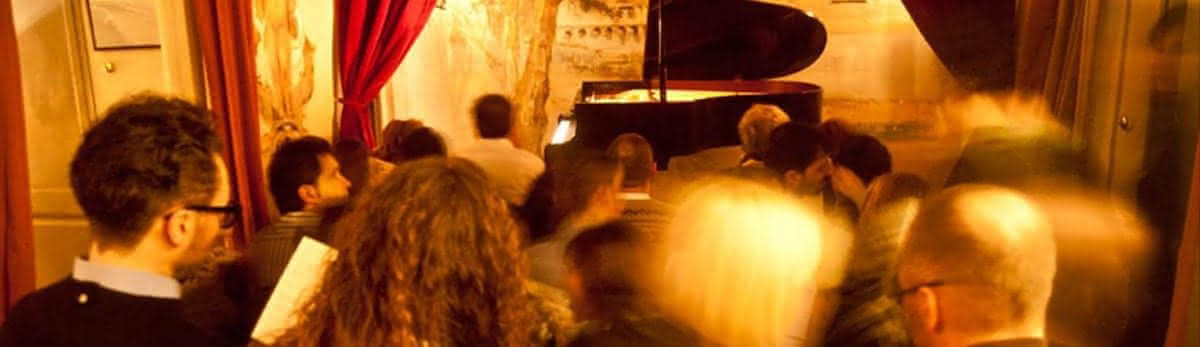
"Solo Piano" è una rassegna di concerti, tenuti ogni sabato sera nel più piccolo teatro del mondo a Barcellona.
Il grande compositore e pianista Luis de Arquer lascia spazio nella sua casa al più piccolo teatro del mondo "El Teatre més Petits del Món), che offre una splendida atmosfera per la musica di Chopin, Beethoven, Mozart e dello stesso Arquer.
La serata si conclude con un bicchiere di champagne nel suggestivo giardino.
Rimarrete entusiasti dopo questa serata!
Artisti
| Solista: | Luis de Arquer Luis de Arquer inizia i suoi studi a Cerdanyola del Vallés, una piccola città vicino a Barcellona, provenendo da una famiglia di grandi artisti e amanti della musica. Durante le prime lezioni, una sonata di Beethoven interpretata dalla sua prima insegnante, Lolita Martínez, ebbe un impatto così profondo su di lui che decise di dedicare la sua giovane vita alla musica. Alla tenera età di sette anni, improvvisò diversi stili al pianoforte, tra cui Bach, Chopin e Beethoven, affascinando il pubblico con la sua abilità e immaginazione musicale. I suoi rapidi progressi gli aprirono le porte dell'Academia Marshall di Barcellona, un luogo di incontro in passato per i migliori musicisti dell'epoca. Termina gli studi con il primo premio e un encomio speciale da parte della commissione. Grazie a una borsa di studio della Generalitat de Catalunya, si perfeziona all'Ecole Normale de Musique de Paris sotto la guida di Aquiles Delle‐Vigne. |
|---|
Recensioni clienti
4.5 di 5
-
Alexandre B., France
ago 2012
Nous avons passé une excellente soirée. L'accueil était parfait. Les places sont réservées une fois que l'on s'est présenté durant la 1/2 heure qui précède le début du concert. Cela permet d'aller prendre un verre dans les ruelles alentour. La salle est dotée d'une bonne acoustique. Louis de Arquer a passé plusieurs minutes à détailler son interprétation ainsi que ses propres œuvres, dans un Castillan plus que compréhensible. A la fin du concert succède la dégustation d'un cava dans le patio de l'arrière cour — endroit très agréable, légèrement éclairé. Louis, comme osent l'appeler tous les gens présents, va alors de groupe en groupe, discuter avec son auditoire. Il nous a, avec émotion, dédicacé un de ses CD (gagné quelques minutes plus tôt) aux cours des mots que nous avons échangé en Français.
-
Kerstin K., Germany
lug 2012
it is a very individual atmosphere and if you are a fan of feeling the music this is the right place
-
Sergio G., Spain
feb 2012
It was one of the best piano recitals I have ever been! I am very thankful with you, because I bought this ticket on December and because of work issues I could t go to the event, and you gave me a 70% refund, and this make that I could bought the two tickets again for this time.
-
EVA P., Spain
dic 2011
Fue una total sorpresa, pues no teniamos conocimiento ni del local ni del pianista. El local es realmente original y muy acogedor, es la misma casa donde reside el pianista, el cual me pareció extraordinario, con muchísima fuerza. Para terminar nos ofrecieron una copa de capa en el jardin y pudimos hablar con el pianista, el cual es una persona muy agradable y un gran conversador. Un 10 en todo. Repetiremos y lo recomendaremos.
Indirizzo
El Teatre més Petit del Món, Carrer de l'Encarnació, 25, Barcellona, Spagna — Google Maps