 © Nils Schwarz
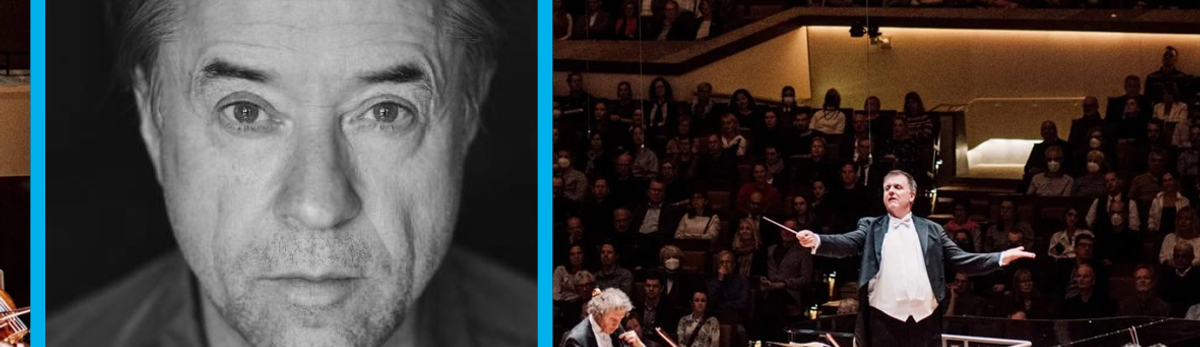
 JAN JOSEF LIEFERS está lendo! na Philharmonie Berlin
Berlim, Filarmonica de Berlin — Grosser Saal
Sobre o Evento
Duas obras‐primas da história da música reunidas: o programa apresenta a Sinfonia nº 5 de Beethoven, uma das obras mais famosas do período clássico.
Nenhuma outra obra demonstrou de forma tão poderosa como a música pode transformar em som as questões existenciais de luta, esperança e triunfo. Até mesmo o marcante motivo inicial — frequentemente chamado de “motivo do destino” — está entre as frases musicais mais reconhecíveis de todos os tempos. Ludwig van Beethoven compôs a sinfonia durante um período de crise pessoal, marcado por sua surdez progressiva. Foi precisamente isso que lhe permitiu desenvolver uma expressividade musical sem precedentes na época. Da abertura dramática em dó menor ao final radiante em dó maior, desenrola‐se uma jornada musical da escuridão para a luz, que continua a emocionar o público em todo o mundo até hoje.
Em contraste, apresentamos a famosa *O Carnaval dos Animais* de Camille Saint‐Saëns, uma obra de rara profundidade emocional e imagética musical imaginativa. Com sua *Grande fantaisie zoologique*, Saint‐Saëns criou em 1886 um caleidoscópio musical tão virtuoso em sua composição quanto espirituosamente irônico. Em movimentos curtos e característicos, diversos animais são retratados com humor — de leões majestosos e cisnes elegantes a fósseis animados. Com sutileza e humor, Saint‐Saëns incorpora inúmeras alusões musicais, parodia melodias conhecidas e cita obras de compositores renomados, bem como sua própria Danse macabre. Ele escreveu a peça originalmente como entretenimento privado para amigos, temendo que a obra humorística pudesse prejudicar sua reputação como compositor sério. No entanto, foi justamente essa leveza lúdica que tornou *O Carnaval dos Animais* uma de suas obras mais populares.
Programação
- Ludwig van Beethoven – Symphonie Nr. 5 c‐Moll op. 67
- Camille Saint‐Saëns – Le Carnaval des animaux (Der Karneval der Tiere)
Artistas
| Piano: | Ingmar Lazar |
|---|---|
| Orquestra: | Leipziger Philharmoniker |
| Condutor: | Michael Koehler |
| Narrador: | Jan Josef Liefers |
| Piano: | Haiou Zhang |
Philharmonie Berlin
The Philharmonie is a concert hall opened in 1963 in West Berlin. It is considered the musical heart of the German capital, as well as the new urban centre after the fall of the infamous Berlin Wall. Its distinctive bright yellow exterior and unusual tent-like shape quickly made it a city landmark. The surprising design and architecture were initially viewed negatively by many, but the Philharmonie is now considered a model for concert halls worldwide. The architect, Hans Scharoun, aimed to design a concert hall in which the focal point - the musicians on the concert platform - is equally visible from every seat, an aim that gave rise to the hall's unusual shape. Since its inauguration, the Berliner Philharmonie has hosted numerous concerts, often featuring acclaimed soloists and conductors.
Antonio Vivaldi
Antonio Vivaldi went down in history as a creator of the instrumental concert genre and the father of orchestral music. He was born in Venice on the 4th of March 1678. Vivaldi was a weak and sickly child suffering from asthma, however could not stop him from devoting himself completely to music. His father, Giovanni Batista a professional violinist, taught his elder son Antonio to play the violin. With his father young Antonio met the best musicians of Venice of that time and gave concerts in local churches. He also worked as a violin teacher and later as a music director at the orphanage Ospedalle della Pieta. Meanwhile he composed concertos, sacred works and vocal music and in 1713 he achieved great recognition with his sacred choral music. Vivaldi got captivated by the world of opera and worked both as opera composer and impresario at the Teatro San Angelo. In 1717 he obtained a prestigious position by the prince court in Manua as a director of secular music and worked there until around 1720. During that time he composed his world-renowned masterpiece The Four Seasons. In the 1730's his career dwindled as his music became unfashionable and the great composer died in poverty. It took the world two centuries to rediscover and reevaluate Vivaldi’s music, as it was buried into oblivion after his death. In the early 20th century many previously unknown works were found and immediately captured the hearts of the music lovers.
Georg Friedrich Händel
An English subject with German origins, Georg Handel was truly a musical pioneer, combining musical traditions of English, Italian and German composers. He was born in 1685 in Halle, Germany, into a very religious and conservative family. His father was dreaming for his son to become a lawyer and would not let young Georg play musical instruments at home. But the Duke Johann Adolf accidentally heard him playing in the chapel and convinced Georg's father to let his son receive a musical education. Thus, Handel became a pupil of the famous organ player and composer Friedrich Zachow. The first success came to Handel in 1705 when he moved to Hamburg and staged his two premiere operas, Almira and Nero, in the Oper am Gänsemarkt. Almira immediately became a highlight of the theatre and was performed around 20 times. Later next year Handel moved to Italy were he received high acclaim and was put on the same level as renowned Italian composers of the time. In 1710 Handel travelled to London where later he decided to settle down. There he wrote a sacred choral piece "Te Deum" that was played in St. Paul´s Cathedral at the ceremony devoted to signing the Utrecht Treaty. From that moment onwards he became the leading composer of England, as the country did not have any native prominent composers. His oeuvre was mainly focused on operas, but by 1730 the genre of Italian opera ceased to be popular and Handel´s success dwindled. During the last years of his life until his death in 1759 he was mainly composing oratorias, including his famous and magnificent Messiah.
Morada
Filarmonica de Berlin, Herbert‐von‐Karajan‐Str. 1, Berlim, Alemanha — Veja no Google Maps