판테온 근처에서 즐기는 비발디 단독 공연: ‘사계’ — 시대를 초월한 우아함이 가득한 저녁!
로마, 성 이보 성당 — Main
공연 정보
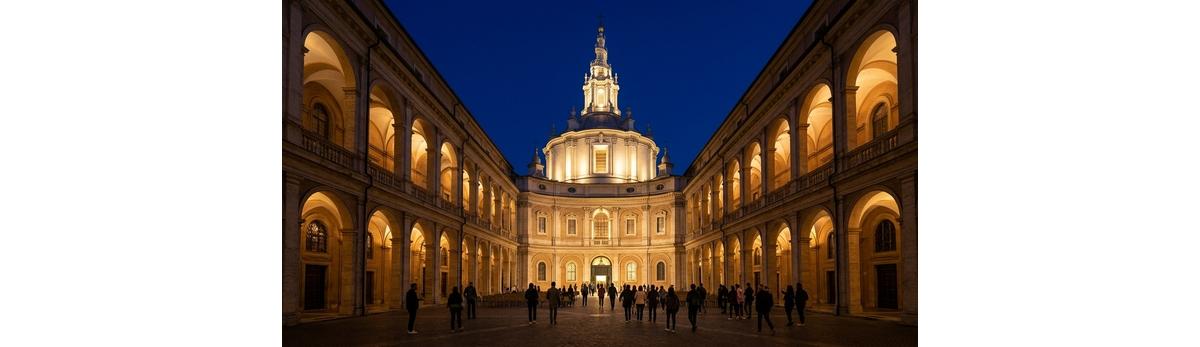
판테온과 나보나 광장 사이, 이탈리아 역사와 예술의 중심지에서, 웅장한 바로크 양식의 보석과도 같은 산티보 알라 사피엔차 교회와 그 르네상스 양식의 안뜰이라는 위엄 있는 공간에서, 비발디의 걸작을 현악 5중주 편곡으로 감상해 보세요.
1642년부터 1660년 사이에 지어졌으며 천재 건축가 프란체스코 보로미니가 설계한 산티보 알라 사피엔차 교회는 ‘숨겨진 로마’의 바로크 걸작으로, 탁월한 음향과 신성한 지혜를 상징하는 기하학적 구조를 자랑합니다. 독특한 별 모양의 평면 구조와 유명한 나선형 랜턴은 불타는 왕관과 연철로 만든 비둘기 장식으로 정점을 이룹니다.
프로그램
- 안토니오 비발디 – The Four Seasons Op. 8
아티스트
| 앙상블: | International Strings Ensemble |
|---|
Sant’Agnese in Agone
Sant'Agnese in Agone is an Italian Baroque church built during the 17th-century in Rome. It faces onto the Piazza Navona, one of the most important squares in the Italian capital's histroical centre, and the location of the former Stadium of Domitian, in which the early christian Saint Agnes was martyred. The crypt, or sacellum infimum, is the only remnant of the ancient church that marked the precise spot where the Saint met her grisly end. Piazza Navona also hosts other great works of art such as Bernini's Fountain of the Four Rivers, situated in front of Sant'Agnese in Agone. There are many urban legends that refer to the sculpted figure of the 'Nile' by Bernini and the facade of the church, designed by his rival, Borromini. It is said that Bernini depicted 'Father Nile' covering his eyes in fear that the church in front of him would disintegrate. The story persists because of the bitter rivalry known to have existed between the two artists, despite the fact that the Bernini's fountain was built some years before the church was constructed.
Antonio Vivaldi
Antonio Vivaldi went down in history as a creator of the instrumental concert genre and the father of orchestral music. He was born in Venice on the 4th of March 1678. Vivaldi was a weak and sickly child suffering from asthma, however could not stop him from devoting himself completely to music. His father, Giovanni Batista a professional violinist, taught his elder son Antonio to play the violin. With his father young Antonio met the best musicians of Venice of that time and gave concerts in local churches. He also worked as a violin teacher and later as a music director at the orphanage Ospedalle della Pieta. Meanwhile he composed concertos, sacred works and vocal music and in 1713 he achieved great recognition with his sacred choral music. Vivaldi got captivated by the world of opera and worked both as opera composer and impresario at the Teatro San Angelo. In 1717 he obtained a prestigious position by the prince court in Manua as a director of secular music and worked there until around 1720. During that time he composed his world-renowned masterpiece The Four Seasons. In the 1730's his career dwindled as his music became unfashionable and the great composer died in poverty. It took the world two centuries to rediscover and reevaluate Vivaldi’s music, as it was buried into oblivion after his death. In the early 20th century many previously unknown works were found and immediately captured the hearts of the music lovers.
